Category Archives: Uncategorized

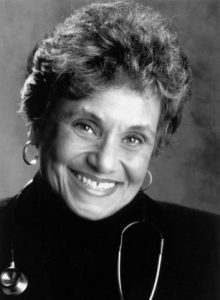
Black History Month 2026: Dr. Marilyn Hughes Gaston

This week, meet Dr. Marilyn Hughes Gaston, whose dedication and passion for health care led her to pave the way for equity. Dr. Gaston’s special focus on sickle cell disease helped shape our understanding of the condition and its management.

Born in 1939, Dr. Gaston’s family faced poverty and discrimination, but she knew by age nine that she wanted to become a physician. When she was a teenager, her mother became ill with what would later be diagnosed as cervical cancer. The family had no health insurance and faced other barriers to access, which meant Dr. Gaston’s mother was not properly treated. After witnessing her mother collapse in their living room due to the lack of care, Dr. Gaston resolved to overcome the odds and pursue a career in medicine.

Dr. Gaston earned an undergraduate degree at the University of Miami before enrolling in the University of Cincinnati College of Medicine, where she was the only Black woman in her class. She became interested in sickle cell disease during her internship at Philadelphia General Hospital in 1964. According to Changing the Face of Medicine, “one evening, during her internship, Dr. Gaston admitted a baby with a badly swollen hand. No trauma was reported, and she could not find the cause of the swelling. Her supervising resident suggested she check the blood work for evidence of sickle cell disease. The child did have SCD, and his hand was swollen from infection. Gaston was appalled that she hadn’t even considered checking for this condition and set out to learn everything she could about it.”

Dr. Gaston dutifully began her studies of sickle cell disease, securing federal grants and establishing herself as a leading expert in the condition. In 1986, she published her landmark research on penicillin prophylaxis. Her national study determined that giving children with SCD preventative penicillin from birth reduced the complications of sickle cell disease. Her work indicated that newborn screening was key to identifying SCD early and treating it properly. Newborn screening now identifies many conditions beyond sickle cell and is standard practice in U.S. public health.

In addition to her groundbreaking work in the sickle cell space, Dr. Gaston spent many years as a medical expert with the National Institutes of Health and went on to become the director of the Bureau of Primary Health Care in the U.S. Health Resources and Services Administration. She was the first Black woman to direct a public health service bureau in the country. Her dedication to improving health care for poor and underserved families has left a lasting mark on history. Thank you, Dr. Gaston, for your commitment to our community.

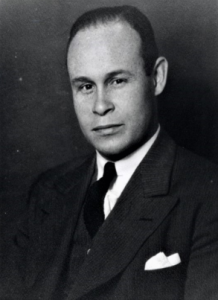
Black History Month 2026: Dr. Roland Scott

Our next #SCDHistoryHighlight shines a light on the life and legacy of the “father of sickle cell disease” – Dr. Roland B. Scott. Dr. Scott’s groundbreaking research and dedication to patients during a time of intense discrimination paved the way for progress in SCD treatment.

Dr. Scott was born in 1909 and graduated with his medical degree from Howard University in 1934. He spent the majority of his career in the pediatrics department of Howard University. During this time, he began to notice the high number of African American children in the emergency room experiencing sickle cell symptoms and complications.

Dr. Scott was a trained allergist, but he switched his focus to help improve treatment for this misunderstood disease. A compassionate pediatrician, Dr. Scott held office hours in the evenings during which he would see African American children and families who were discriminated against and denied access to medical treatment.

Dr. Scott would go on to publish hundreds of articles on sickle cell disease during his time at Howard University. Although he did not specialize in hematology, in 1948 Dr. Scott published a paper on the sickling of red blood cells in newborns. This paper established a better understanding of sickle cell disease and laid the groundwork for newborn screening as we know it today.

In addition to being a dedicated researcher, Dr. Scott was a fierce advocate for sickle cell disease. His advocacy played a large role in the federal government’s passing of the Sickle Cell Anemia Control Act of 1971, which ensured nationwide funding for SCD research and treatment.

In 1972, Dr. Scott founded the Howard University Center for Sickle Cell Disease, which continues to conduct research and provide care to sickle cell patients today. He passed away in 2002. Dr. Scott’s work and advocacy changed the landscape for sickle cell disease, and we owe so much of our capability to treat and understand sickle cell to his efforts.

Black History Month 2026: Dr. Angella Ferguson

Our first 2025 Black History Month #SCDHistoryHighlight features Dr. Angella D. Ferguson, a pediatrician and SCD pioneer who recently passed away at the age of 100.

Dr. Ferguson was born in 1925 and received her bachelor’s and medical degrees from Howard University. After graduation, she began work as a medical researcher at Howard University’s School of Medicine, where she aimed to gather data correlating the height and weight of children with age.

While completing this research, she discovered that a large number of African American children suffered from sickle cell disease, which, at the time, was a fairly unknown condition. She changed gears and committed her time to understanding how the disease presents itself in children. In doing so, she became one of the first researchers to dedicate her studies to sickle cell.

Dr. Ferguson’s research had lasting impacts on how sickle cell is diagnosed and treated. She developed a blood test to diagnose the disease in infants, and her test is the standard in most states to this day. Thanks to her research, we better understand which symptoms to look for in children and can start treating sickle cell earlier.

Dr. Ferguson passed away on January 6, 2026. We send our condolences to her family and friends and extend our deepest appreciation for her steadfast commitment to our community.

CMMI Announces the Cell and Gene Therapy Access Model

Today, the Centers for Medicare and Medicaid Innovation (CMMI) announced the launch of their new Cell and Gene Therapy Access Model, a demonstration aimed at improving access to cell and gene therapy products in the Medicaid program. CMMI chose sickle cell disease (SCD) as the first indication for the model. The intent of the model is to provide access to the two recently approved gene therapy products for SCD for individuals insured by Medicaid. Participation by state Medicaid programs will be optional.

SCDAA is excited about the model and appreciated that CMMI engaged with our organization and the broader SCD community while developing the demonstration. SCDAA will be reviewing the information released today in detail, but we are hopeful that this effort will help ensure that individuals living with SCD on Medicaid who are interested in pursuing gene therapy are able to do so.

To read the full statement from the Centers for Medicare & Medicaid Services, click here.

Gene Therapy: What You Need to Know (Warrior FAQs)

Two gene therapies were recently approved by the Food and Drug Administration (FDA) to treat sickle cell disease: Casegevy from CRISPR/Vertex and Lyfgenia from bluebird bio. You probably have questions about these new treatment options. Read more below.

Is gene therapy a cure for sickle cell disease?
Gene therapy is a potentially curative therapy. This means that it could act as a cure, but it is too new to say for sure. It causes a big decline in pain episodes, but we need to learn more about long-term impacts and side effects. It is also not a “one-and-done” treatment. The FDA currently recommends 15 years of patient follow up.

How does gene therapy work?

When will it be available?
Likely in early 2024.

Am I eligible for gene therapy?
Casgevy and Lyfgenia are approved for people ages 12 and up. Sickle cell disease SS and S-beta-zero-thalassemia are eligible. The FDA indicates that sickle cell disease SC is not included. Additionally, you may also not be able to receive gene therapy if you have:

  • A recurring viral infection
  • Significant organ damage

Additionally, if you have a matched sibling, you should go down the path of a matched-sibling-donor bone marrow transplant instead of gene therapy. Talk to your doctor about this option.

What are the side effects?
Gene therapy requires you to have chemotherapy. This means it could result in:

  • Infertility or secondary cancer
  • Temporary weakening of the immune system so that you cannot fight off any infections
  • Temporary hair loss

Where can I receive gene therapy?
Treatment will likely be at an existing bone marrow transplant center that also works with sickle cell disease experts. These may be hard to find. SCDAA will be providing a list of facilities, once identified, on our website: sicklecelldisease.org.

How much will it cost? Will insurance cover it?
Gene therapy is expensive, and FDA-approved high-cost medications can come with barriers. Casgevy is estimated to cost $2.2 million, and Lyfgenia is estimated to cost $3.1 million. We are still waiting to hear how insurance companies will handle gene therapies.

Does gene therapy work for all types of SCD?
As far as we know, yes. It is designed to be able to help raise fetal hemoglobin (HbF), which should work for all different kinds of sickle cell disease. However, the amount of experience with the different kinds has not been nearly the same – we know the most for SS and S Beta zero thalassemia types.

Are we the first community to receive gene therapy?
Casgevy is the first approved use of gene editing. However, gene addition therapy has been used to treat other conditions, including:

  • Retinal degeneration
  • Spinal muscular atrophy
  • Beta-thalassemia
  • X-linked Adrenoleukodystrophy
  • Hemophilia A & B
  • Bladder cancer
  • Acute-lymphoblastic leukemia

To learn more about the gene therapies used to treat these conditions, click here.

For a longer (but not complete) list of conditions that have been treated using gene therapy, click here.

Is it safe? How do I know if this is right for me?
For many people, the benefits of this new treatment outweigh the risks. Your doctors will help you determine whether this is a good option for you.

What questions should I ask my doctor?

  • How long will this take?
  • What is the time commitment?
  • Where is the nearest treatment center?
  • What are my other options?

How do I learn more about gene therapy?
There are several resources available. The below sources are considered trustworthy and non-biased by SCDAA.

To learn more about Vertex’s Casgevy, visit casgevy.com. To learn more about bluebird bio’s Lyfgenia, visit my bluebird support.

We encourage you to subscribe to our email list for news and updates.

Updated Dec. 14, 2023, at 11:09 a.m. EST


Please note: A previous version of this FAQ incorrectly stated that Casgevy is approved for people ages 12 and up and Lyfgenia is approved for those ages 12 to 50. This statement has been corrected to note that both Casgevy and Lyfgenia are approved for people ages 12 and up.

CDC SCD Pregnancy Fact Sheets

Learn more about how to stay healthy leading up to, during and after a pregnancy with these newly developed fact sheets from the Centers for Disease Control and Prevention (CDC), the Foundation for Women & Girls with Blood Disorders, the American Society of Hematology and the Sickle Cell Reproductive Health Education Directive.

NOW IN SPANISH!


In Memory of Dr. Lennette Benjamin

The Sickle Cell Disease Association of America, Inc., (SCDAA) is saddened to hear the news of the passing of Dr. Lennette Benjamin. Dr. Benjamin was a trailblazing physician who made many outstanding contributions to the sickle cell community. She was one of the first to establish a “day hospital” as an alternative to the emergency room for pain management – an approach that is today recognized as a best practice in care.  

Prior to her retirement, Dr. Benjamin led the Montefiore Sickle Cell Center for Adults in the Bronx, New York. She was an SCDAA board member emeritus and served on the SCDAA Medical and Research Advisory Committee. 

Dr. Benjamin was also a dedicated advocate and mentor. She made a global impact and raised sickle cell awareness in West Africa, Brazil and beyond. “She was always looking out for others, patients and peers alike,” recalls Dr. Lewis Hsu, SCDAA chief medical officer. “She was full of warm advice and expert guidance.”

Dr. Benjamin passed away in Houston, Texas on Oct. 20 at the age of 82. To share your sympathies, please click here.

SCDAA’s National Office and Board of Directors pay tribute to Dr. Benjamin’s outstanding life and career and send our deepest condolences to her family, friends and loved ones. 

New Opiate Dosing Calculator for Health Care Providers

NEW RESOURCE AVAILABLE: This tool from the National Alliance of Sickle Cell Centers can help sickle cell providers make important decisions about dosage when prescribing opiates. The calculator was developed was Paula Tanabe, RN, Ph.D., and Patricia Kavanagh, M.D., through a grant funded by the National Heart, Lung and Blood Institute. Click here to access the resource.

Click here to read the full study.